Thurston County septic care that starts with an evaluation
Buying or selling, chasing a problem, or just due for routine care. One visit tells you where the system stands.
Septic services in Olympia, done in the right order
Septic services in Olympia go wrong when someone quotes a fix before anyone has opened the tank. So the order here is simple. Look first. Then do the work the findings call for, and nothing more.
People land on this page for one of three reasons.
They’re buying or selling a house on septic. A real estate septic inspection puts the system’s condition in writing before the deal closes, which protects both sides of the table.
Something seems off. Drains are slow, there’s a smell, or the ground over the tank stays wet. The guide to signs of septic trouble walks through what each symptom usually turns out to mean.
Or nothing is wrong and it’s simply time. Most tanks around here are due for routine pumping every three to five years. A septic inspection done alongside the pumping tells you how the rest of the system is holding up.
Whatever brought you here, the work runs the same way. Sometimes the answer is pumping. Sometimes it’s a repair. Once in a while a system is truly at the end of its life, and the conversation turns to replacement. But that conversation should never start before the evaluation.
One more local fact worth knowing. Septic in Olympia is not a city matter. Systems are permitted and tracked by Thurston County Public Health and Social Services, the county health department. If you live in the sewered core of Olympia, Lacey, or Tumwater, you’re likely on the LOTT sewer system and will never think about any of this. Septic homes sit outside that core, on the peninsulas north of town, along the inlets, and on the acreage lots that fill unincorporated Thurston County.
Three reasons people call
-
Buying or selling a home
The system gets inspected and the findings go in writing for the transaction.
Read more -
Something's wrong
A backup, an odor, wet ground, or an alarm. An evaluation finds the cause before anyone talks about fixes.
Read more -
Time for routine care
Regular pumping keeps solids out of the drain field. Most tanks are due every three to five years.
Read more
Our Services
-
Septic Inspections
A proper inspection opens the system up and looks: tank condition, components, levels, and how the drain field is taking water.
Learn more
-
Real Estate Septic Inspections
Buying or selling a home on septic usually means the system gets inspected, often on a deadline.
Learn more
-
Septic Tank Pumping
Routine pumping removes the solids the system can't break down. It's the single most important maintenance a septic system gets.
Learn more
-
Septic Repairs
Lids, baffles, filters, distribution boxes, pumps, floats, alarms: the components that fail before the system does.
Learn more
-
Drain Field Repair & Restoration
The drain field is where most septic systems actually fail, and where the biggest repair decisions get made.
Learn more
-
Septic System Replacement & Installation
When a system is truly at the end of its life, replacement is a designed, permitted project rather than a bigger repair.
Learn more
-
Septic Maintenance & Compliance Checks
Some systems, and some jurisdictions, call for inspections on a recurring schedule instead of only when something goes wrong.
Learn more
What’s actually buried in your yard
A septic system has four working parts, and most homeowners have only ever seen one lid.
The pipe from the house carries everything you flush or drain out to the septic tank. The tank is a buried box, usually concrete, holding 1,000 to 1,500 gallons. Solids sink to the bottom and become sludge. Grease floats to the top and becomes scum. The water in the middle moves on to the next stage.
That next stage is often a distribution box, a small chamber that splits the flow evenly between buried pipes. The pipes run through gravel trenches in the drain field. Water seeps out of them, and the soil finishes the job. Microbes in the soil break down what’s left before the water reaches groundwater.
The drain field is where septic systems live or die. A full tank gets pumped in an afternoon. A drain field that has been fed solids for years clogs from the inside, and no amount of pumping brings it back. Replacing one is the single biggest ticket in septic work. That’s why pumping on schedule matters. It keeps solids in the tank and out of the field.
Around Olympia you’ll see more than the classic setup. Gravity systems are common on older lots with soil that drains well. Where the ground is hard glacial till or the winter water table sits high, sites get engineered systems instead: pump chambers, pressure distribution, mounds, sand filters. If your system has a control panel and an alarm, it’s one of these. The full guide to how septic systems work explains each design in plain language.
How a septic evaluation usually goes
- 1
Locate and open the tank
The tank and its lids get found and uncovered, with county permit records to help when the owner isn't sure.
- 2
Check components and levels
Sludge and scum levels, baffles, and any pump gear get a close look.
- 3
Walk the drain field
The field area is checked for wet spots, odors, and any sign of effluent reaching the surface.
- 4
Review the findings
You hear what was found and what work, if any, the findings call for.
Closing on a house with a septic system?
Inspections for a sale are documented for the transaction and scheduled with the closing date in mind.
Signs a septic system is asking for attention
-
Slow drains
Every fixture draining slowly at once can point to a full tank.
-
Gurgling plumbing
Air pulled back through the pipes often means the system is working against a blockage.
-
Sewage odor
A smell indoors, near the tank, or over the field is worth checking soon.
-
Wet or lush patches
Soggy ground or a bright green stripe over the drain field can mean effluent is surfacing.
-
Backups
Sewage at the lowest drain in the house is the clearest sign something is blocked or full.
-
Alarm sounding
A pump-chamber alarm means the system wants attention, not that disaster has already struck.
How Olympia’s ground and rain treat a septic system
The glaciers decided how septic works here. They left two kinds of ground, and they behave nothing alike.
Much of Thurston County sits on glacial till, a compacted layer a foot or two below the topsoil that water barely moves through. In summer a till lot seems fine. Then the rain comes. Olympia gets around 50 inches a year, most of it between November and March, and on till that water has nowhere to go. The water table rises, trenches sit in saturated ground, and a drain field that limped through August fails outright in January. It’s no accident that backup calls here cluster in the wet months.
South of town the story flips. The prairie ground around Rochester, Grand Mound, and Littlerock is gravelly glacial outwash that drains fast. Those soils accept water easily, so the concern shifts to treatment, and newer systems there often add a sand filter or other extra step before the water moves on.
The housing stock tells you a lot too. Waterfront places on Budd Inlet, Boston Harbor, and the Steamboat Island peninsula often date to the mid-1900s, with small tanks and paperwork that can be thin or missing. The acreage subdivisions that spread through the county in the 1970s through the 1990s mostly run gravity systems now 30 to 50 years old, right in the window where baffles rust and fields tire. Newer construction outside the sewer line usually carries an engineered system with a pump and a panel.
All of it answers to Thurston County Public Health and Social Services, which issues the permits and keeps records of most systems in the county. Those records are worth pulling before any work. In the Henderson Inlet and Nisqually Reach watershed protection areas, the county goes further and expects regular system checks from owners.
The common calls in this area follow the pattern you’d guess. A winter backup that turns out to be a tank pumped ten years ago. A pump alarm sounding after a power outage. And every spring, a wave of sale inspections as houses on septic go on the market.
Areas We Serve
- Olympia
- Lacey
- Tumwater
- Yelm
- Tenino
- Rochester
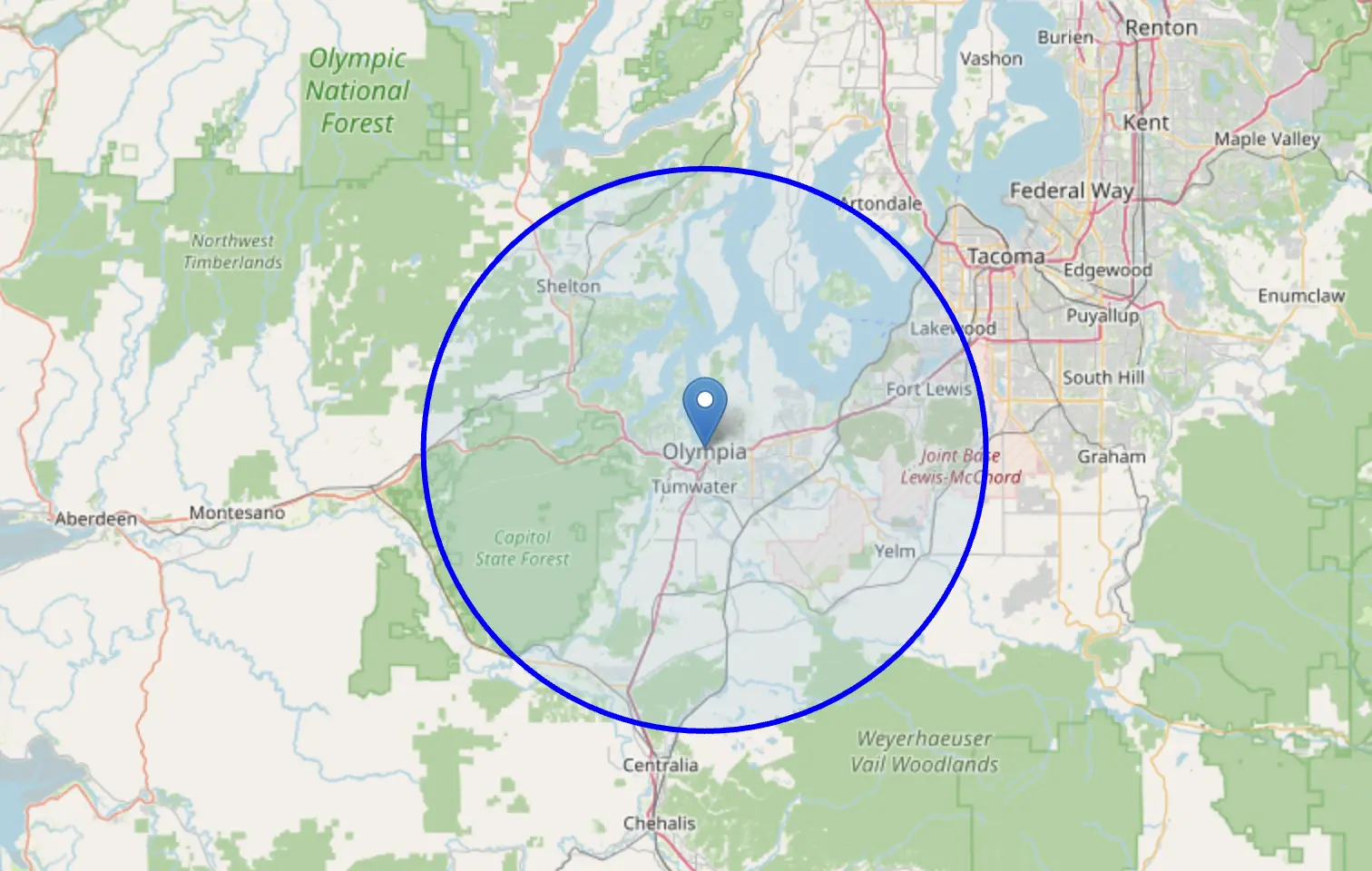
Find local details for each community on our service-area pages.
Frequently Asked Questions
How often does a septic tank need to be pumped?
There's no single interval. Health departments commonly cite a few years between pumpings, but the right schedule depends on the system type, the tank size, how many people live in the home, and any local rules. A tank that gets evaluated regularly ends up on the schedule that fits it instead of a rule of thumb.
What does a septic inspection involve?
A thorough inspection typically starts with locating and opening the tank, then assessing its condition, components, and levels, and evaluating how the drain field is taking water. Findings are documented so you can see what was checked and what it means. Scope varies with the system and the reason for the visit, and it's confirmed up front.
Is a septic inspection required to sell my house?
It depends on where you are. Some states and counties require a septic inspection or pumping when a property changes hands, while in other places it's driven by the buyer or the lender. Your local health authority is the source of record, and the requirement question usually gets settled early in the transaction.
Do wet spots in the yard mean my drain field has failed?
Not necessarily. Wet or unusually lush patches over the field can point to drain field trouble, but they can also trace to a component issue upstream or to surface drainage that has nothing to do with the septic system. An evaluation settles which one it is before any big decisions get made.
What does it mean when the septic alarm goes off?
An alarm usually signals a high water level or a pump issue on systems that use one. It calls for prompt attention, but it rarely means an emergency is underway. Cutting back water use and having the system looked at soon is the sensible response.
Can septic problems be fixed without replacing the system?
Often, yes. Lids, baffles, filters, distribution boxes, pumps, floats, and alarms all wear out long before a whole system does, and many problems trace to one of them. An evaluation tells whether you're looking at a component repair or something bigger.