Septic Services in Tenino, WA
Septic in Tenino: old town, old ground, old systems
Tenino is the county’s stone town, the place that quarried the sandstone in half the grand buildings of the Northwest and famously printed wooden money during the Depression. That history matters to septic work more than you’d think, because Tenino’s housing skews genuinely old. The blocks around downtown carry homes from the early 1900s, and the farmhouses scattered toward Bucoda and up Skookumchuck Road can be older still. In-town addresses generally ride on the city’s small utility systems. Everything outside, which is most of the zip code, handles its own wastewater.
Old housing means layered history underground. A 1920s farmhouse may have gone from outhouse to cesspool to a 1960s tank to a 1980s repair, each era leaving something buried and half the record never written down. It’s common for an owner to know the tank’s rough direction and nothing else. Systems like that aren’t necessarily failing. They’re unknown, which is its own risk category.
Then there’s the namesake stone. Sandstone and its cousins sit shallow under parts of the Tenino country, and shallow rock is a drain field’s hardest landlord: little vertical soil to treat water, nowhere for trenches to go. Between the rock outcrops run the Scatter Creek prairie gravels, fast-draining ground that hosts some of the area’s best fields and, near the creek itself, a wildlife-and-water sensitivity that keeps designs conservative. One rural mile can span all three conditions.
Oversight is county business, as everywhere outside city lines here. Thurston County Environmental Health holds whatever permits exist for a property, and for Tenino’s oldest places, the file being thin or empty is itself useful information.
What Tenino properties tend to need
The number-one Tenino job is simply establishing the truth. A septic evaluation that locates the tank, opens it, and maps what’s actually down there turns an unknown system into a known one, and for pre-war properties that knowledge is worth more than any repair. Plenty of these evaluations end well: old doesn’t mean failed, and a carefully used 1970s gravity system on good prairie soil can have years left.
Sales lean on the same work from a harder angle. Thurston County’s transfer rule doesn’t care that a house is 100 years old and the records are gone, so a pre-sale septic inspection ordered early is doubly important here, where surprises are likelier and fixes on shallow ground need more design time than fixes on deep soil.
Coverage, honestly stated: Tenino sits twenty to twenty-five minutes south of Olympia down old Highway 99, and scheduling runs from the Olympia end, as it does across the service area. The drive is shorter than the history lesson most Tenino tanks have to tell.
Our Services
-
Septic Inspections
A proper inspection opens the system up and looks: tank condition, components, levels, and how the drain field is taking water.
Learn more
-
Real Estate Septic Inspections
Buying or selling a home on septic usually means the system gets inspected, often on a deadline.
Learn more
-
Septic Tank Pumping
Routine pumping removes the solids the system can't break down. It's the single most important maintenance a septic system gets.
Learn more
-
Septic Repairs
Lids, baffles, filters, distribution boxes, pumps, floats, alarms: the components that fail before the system does.
Learn more
-
Drain Field Repair & Restoration
The drain field is where most septic systems actually fail, and where the biggest repair decisions get made.
Learn more
-
Septic System Replacement & Installation
When a system is truly at the end of its life, replacement is a designed, permitted project rather than a bigger repair.
Learn more
Areas We Serve
- Olympia
- Lacey
- Tumwater
- Yelm
- Tenino
- Rochester
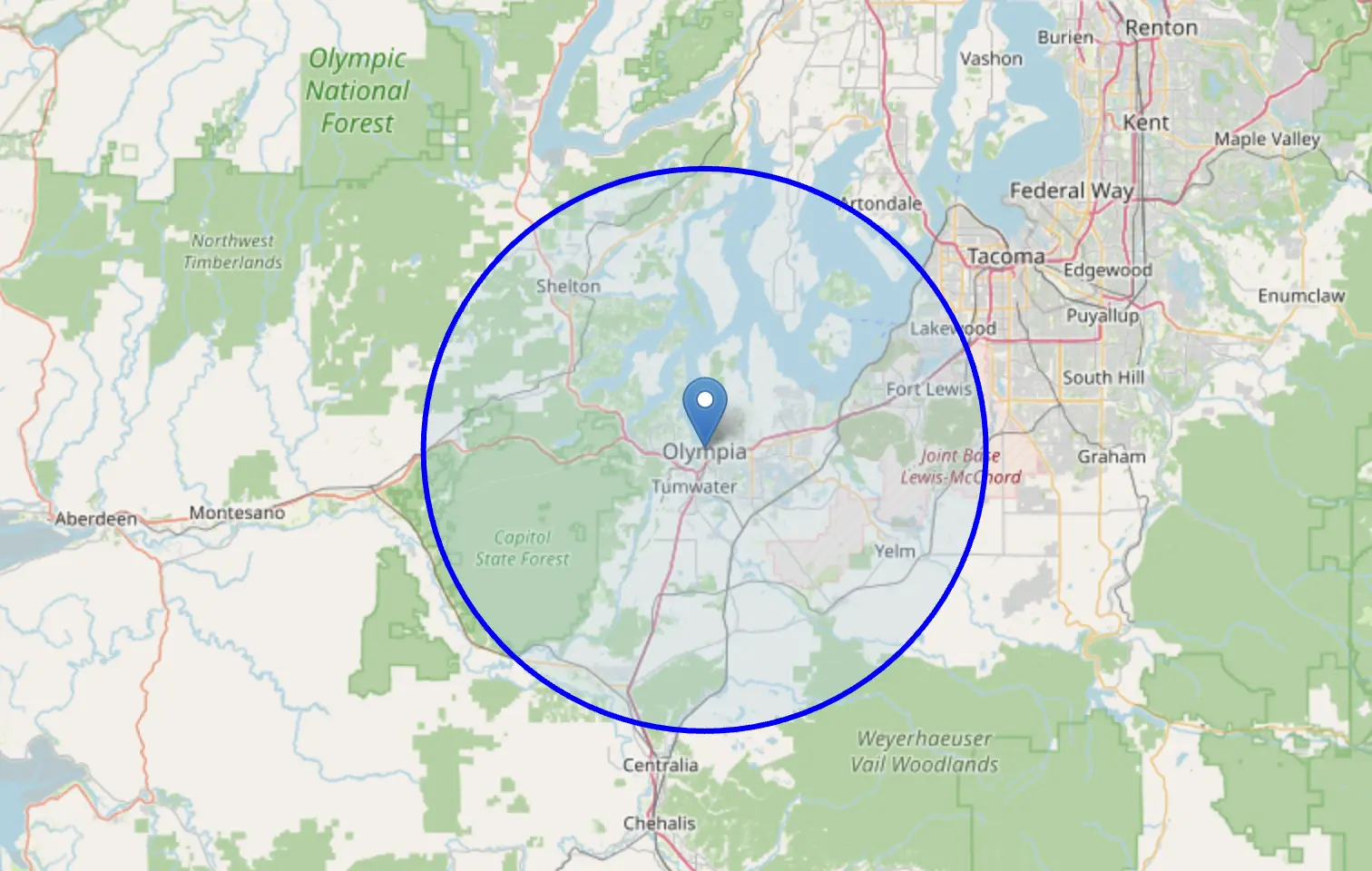
Find local details for each community on our service-area pages.
Frequently Asked Questions
Why is siting a septic system harder around Tenino?
The ground changes fast. Sandstone sits shallow in places, Scatter Creek's prairie gravels drain quickly in others, and seasonal wet spots fill the gaps between. Test holes decide what a lot can support, which is why neighboring properties can end up with very different systems.
My Tenino house is from the 1920s. What should I assume about its septic?
Assume nothing is documented until proven otherwise. Homes that old have often run through several generations of waste handling, and what's in the ground may not match any record. An evaluation that locates and opens the system is the reliable starting point.